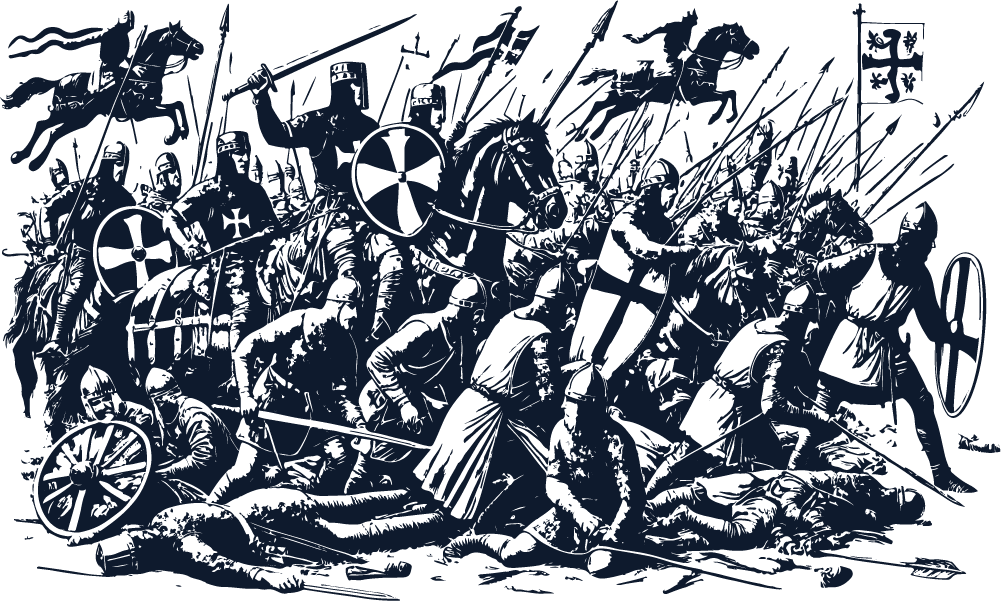
The Norman Conquest of 1066 is widely regarded as one of the most transformative events in British history. It not only changed the leadership of England but also profoundly reshaped its society, culture, and institutions. The effects of this conquest reverberated through centuries, altering everything from the language people spoke to the laws that governed them. The Conquest marked the beginning of Norman dominance over England and set the stage for the gradual blending of Anglo-Saxon and Norman traditions, shaping the foundation of modern British identity. This blog post will explore the causes of the Norman Conquest, the pivotal events that led to William the Conqueror’s ascension, and the long-lasting changes that followed his victory.
What Led to the Norman Conquest?
The Norman Conquest didn’t occur in isolation but was the culmination of several events and circumstances that created a power vacuum in England. The key cause was the succession crisis following the death of King Edward the Confessor, a situation that led to multiple claims for the English throne. However, the deeper tensions between England and Normandy, alongside the ambitious expansionist vision of Duke William of Normandy, played equally important roles in sparking the Conquest.
Edward the Confessor’s Death and the Succession Crisis
King Edward the Confessor died in January 1066, leaving behind no direct heirs to take the English throne. His reign, lasting from 1042 to 1066, had been relatively stable, but the lack of a clear successor left the country vulnerable to political instability. Edward’s death ignited a fierce contest for the crown, and three key figures stepped forward as contenders: Harold Godwinson, Earl of Wessex; Harald Hardrada, King of Norway; and William, Duke of Normandy.
Harold Godwinson was the most powerful nobleman in England at the time, and he was crowned king shortly after Edward’s death. However, his rule was immediately challenged. Harald Hardrada believed he had a claim to the throne due to earlier agreements between his ancestors and previous English kings. Meanwhile, William of Normandy claimed that Edward the Confessor had promised him the throne years earlier during a visit to Normandy. William also asserted that Harold Godwinson had sworn an oath to support his claim. These conflicting claims set the stage for one of the most tumultuous years in English history.
William’s Claim to the Throne
William of Normandy’s claim was based not only on promises and oaths but also on strategic alliances. He had maintained a close relationship with King Edward during Edward’s exile in Normandy and believed that the English throne was rightfully his. According to Norman sources, Harold Godwinson had even sworn allegiance to William during a visit to Normandy, possibly under duress, promising to support his claim to the throne. Harold’s acceptance of the English crown was therefore seen as a betrayal by William, and this fueled his determination to invade England.
William’s preparation for the invasion was methodical and took several months. He garnered support from across Normandy and other regions of France, assembling an army of thousands of men, including infantry, cavalry, and archers. William also secured the backing of Pope Alexander II, who sent him a papal banner, signifying that his campaign had divine approval. This support was crucial, as it legitimized William’s claim and motivated many to join his cause, turning the invasion into not just a political conquest but a religiously sanctioned mission.
The Battle of Hastings: A Decisive Moment
The Battle of Hastings was the defining moment of the Norman Conquest. It was a clash of two powerful forces: the Anglo-Saxon army led by Harold Godwinson, and the Norman army led by William of Normandy. The outcome of this battle would determine the fate of England for generations to come, marking the end of Anglo-Saxon rule and the beginning of Norman dominance.
The Invasion of England
In September 1066, after months of preparation, William set sail from Normandy with a large fleet, reportedly consisting of over 700 ships and around 7,000 soldiers. The weather initially delayed his crossing, but once conditions improved, William’s fleet landed at Pevensey on the south coast of England. Harold Godwinson, meanwhile, had just fought off a Viking invasion led by Harald Hardrada at the Battle of Stamford Bridge in the north of England. Having defeated Hardrada’s forces, Harold was forced to rapidly march his army southward, covering hundreds of miles in just a few days, to meet William’s invasion.
The Battle Itself
The Battle of Hastings took place on October 14, 1066, and lasted for an entire day. William’s forces were well-prepared, consisting of a mixture of infantry, cavalry, and archers, while Harold’s army was primarily composed of infantry, many of whom were exhausted from their long march south. The battle was intense, with both sides suffering heavy casualties. According to historical accounts, Harold’s forces initially held the high ground, giving them a defensive advantage. However, William’s tactical use of cavalry and feigned retreats lured parts of Harold’s army into breaking their defensive formation.
The turning point came late in the day when Harold was struck down—legend says by an arrow to the eye—resulting in a breakdown of Anglo-Saxon resistance. With their king dead, the remaining English forces were either killed or fled, leaving William victorious. The defeat at Hastings effectively ended Anglo-Saxon rule in England and allowed William to begin his campaign of consolidation.
The Aftermath: William’s Coronation
The aftermath of the Battle of Hastings was a period of intense consolidation of power for William, as he worked to solidify his rule over England. His coronation was a symbolic moment, but it took years of political maneuvering, military campaigns, and brutal tactics to fully control the land he had won in battle.
The Submission of the English Nobility
Following the death of Harold Godwinson, England’s nobility had little choice but to submit to William’s rule. Although there were pockets of resistance, particularly in the north, most of the remaining English lords came to terms with William in the months following the battle. In a highly symbolic move, William was crowned King of England at Westminster Abbey on Christmas Day 1066. This event marked the official beginning of Norman rule in England and symbolized the merging of Norman and Anglo-Saxon traditions.
Resistance to Norman Rule
While William was crowned king, his reign was far from secure in the early years. English resistance persisted, particularly in regions like Northumbria and East Anglia. Between 1067 and 1072, William faced several rebellions and uprisings.
The most notorious of these was the Harrying of the North, a brutal campaign in which William’s forces ravaged large parts of northern England to quash resistance. Thousands were killed, and entire villages were destroyed, with the land left barren and depopulated for years to come. These brutal tactics effectively crushed the remaining opposition, allowing William to secure his hold over the kingdom.
The Long-Term Impact of the Norman Conquest
The Norman Conquest was not just a political change—it had profound and lasting effects on every aspect of English life. From the introduction of the feudal system to the reshaping of the English language, the impact of the Normans can still be seen today.
The Feudal System: A New Social Order
One of William’s most significant contributions was the introduction of the feudal system A social and political hierarchy where the King owned all land and granted it to nobles in exchange for military service and loyalty. , a hierarchical structure that fundamentally changed the way English society was organized. Under this system, William granted large estates, or fiefs, to his Norman followers in exchange for their loyalty and military service. These Norman lords, in turn, granted portions of their land to knights and other vassals, creating a complex web of obligations and responsibilities. At the top of this hierarchy was the king, who controlled all the land and had the final say in matters of governance.
The introduction of the feudal system led to the replacement of much of the Anglo-Saxon aristocracy with Norman nobles. Anglo-Saxon landowners were dispossessed of their lands, which were redistributed to William’s Norman supporters. This transfer of power had far-reaching consequences, as it laid the groundwork for a new social order in England that persisted for centuries. It also cemented the king’s control over the country, as all land was technically owned by the crown, with tenants only holding it by royal grant.
The Domesday Book: Cataloging England
In 1086, William commissioned the Domesday Book, a comprehensive survey of land ownership and resources throughout England. This monumental work was an administrative tool designed to record who owned what and to assess the value of land for tax purposes. It was a groundbreaking effort, unparalleled in its scope and detail, and it provided William with a clear understanding of his kingdom’s wealth and resources.
The Norman Influence on Language and Culture
Perhaps one of the most significant and lasting impacts of the Norman Conquest was the profound influence it had on the English language. For centuries after the Conquest, Norman French was the language of the ruling elite, while Old English remained the language of the common people. This linguistic divide mirrored the social divide between the Norman conquerors and the Anglo-Saxon population. However, over time, these languages began to merge, leading to the development of Middle English.
The influence of Norman French on the English language is still evident today. Many words related to law, government, and aristocracy—such as “court,” “justice,” “council,” and “noble”—are derived from Norman French. This blending of languages enriched the English vocabulary and contributed to the complexity and flexibility of modern English. Culturally, the Norman Conquest also brought new ideas in art, architecture, and governance, helping to shape a unique Anglo-Norman culture that laid the foundation for modern British identity.
Changes in Architecture: Castles and Cathedrals
The Norman Conquest also brought significant changes to English architecture. One of William’s first priorities after his victory was to build castles across the country to establish and defend Norman authority. These castles were not only military fortifications but also symbols of Norman power and dominance. The Tower of London, one of the most famous castles built by William, remains an enduring symbol of Norman rule.
In addition to castles, the Normans also introduced Romanesque architecture, which can be seen in many of the cathedrals and churches built during this period. Romanesque architecture is characterized by its rounded arches, thick walls, and large towers, features that were designed to convey strength and stability. Many of these structures, such as Durham Cathedral and Ely Cathedral, still stand today as monuments to the Norman influence on English architecture.
The Significance of the Norman Conquest Today
Although the Norman Conquest took place nearly a millennium ago, its impact can still be seen in modern British society. From the legal system to the English language, the legacy of the Conquest continues to shape the way Britain functions today.
The Legal and Governmental System
The Norman Conquest had a profound effect on the English legal and governmental system. William’s introduction of the feudal system created a new structure of governance, where power was concentrated in the hands of the king and his vassals. This hierarchical system laid the foundation for the development of the English monarchy and the legal system that supported it.
One of the most lasting legacies of the Norman Conquest is the concept of trial by jury, which can be traced back to Norman legal practices. The Normans introduced new legal procedures that emphasized fairness and accountability, and these practices evolved over time into the jury system that is still in use today. The idea that a group of impartial citizens could determine the guilt or innocence of an accused person became one of the cornerstones of English law and later influenced legal systems around the world.
Additionally, William centralized power in the monarchy, strengthening royal authority by controlling land distribution and enforcing loyalty through the feudal system. This concentration of power in the king’s hands would shape the development of the English monarchy for centuries, influencing the evolution of parliamentary democracy and constitutional monarchy that defines modern Britain.
The Blend of Cultures
The blending of Norman and Anglo-Saxon cultures created a new, hybrid English identity that continues to influence British society. The Norman aristocracy and the Anglo-Saxon population gradually integrated over the centuries, leading to the fusion of two distinct cultures. This blending was most apparent in language and governance but also extended to art, literature, and social customs.
The Norman elite brought with them a sophisticated court culture, including a strong tradition of chivalry, which had a profound influence on medieval English society. Similarly, the Anglo-Saxons contributed their agricultural practices, craftsmanship, and legal traditions to the emerging Anglo-Norman culture. Over time, this cultural fusion laid the groundwork for the development of a uniquely English identity, one that drew from both Norman and Anglo-Saxon roots.
The integration of these two cultures can also be seen in the gradual shift in power from the Norman conquerors to a more mixed ruling class. By the 12th and 13th centuries, many of the descendants of the original Norman settlers had intermarried with the native Anglo-Saxon population, creating a more unified aristocracy that blended both traditions. This cultural synthesis played a key role in shaping the English nation and its values.
Why Is the Norman Conquest Important for the Life in the UK Test?
Understanding the Norman Conquest is crucial for anyone studying for the Life in the UK test. It represents one of the most important turning points in British history, marking the beginning of Norman rule and the transformation of English society. The test covers the key events of the Norman Conquest, as well as its long-term effects on British culture, governance, and language.
Knowing about the Battle of Hastings, William the Conqueror’s ascension to the throne, and the introduction of the feudal system will help you grasp the broader context of British history. The Norman Conquest laid the foundation for many of the institutions and customs that still exist in modern Britain. Additionally, it is important to understand how the Domesday Book contributed to the administrative organization of England and how the Norman influence on language shaped the development of English as we know it today.
For those preparing for the Life in the UK test, the Norman Conquest is a vital topic that encapsulates themes of power, governance, and cultural integration—ideas that are central to the understanding of British identity. The test may not require in-depth knowledge of every aspect of the Conquest, but having a solid understanding of its key events and consequences will provide a strong foundation for answering related questions.
Conclusion: A New Era for England
The Norman Conquest of 1066 was far more than a simple change in rulers—it was a profound transformation that reshaped the entire fabric of English society. William the Conqueror’s victory at the Battle of Hastings marked the beginning of a new era in English history, one that saw the introduction of the feudal system, the blending of Anglo-Saxon and Norman cultures, and the creation of new legal and governmental structures that have endured for centuries.
The effects of the Conquest are still visible in modern Britain, from the architecture of its castles and cathedrals to the legal principles that underpin its judiciary. For anyone studying for the Life in the UK test, understanding the Norman Conquest is essential. It is a story of power, struggle, and enduring legacy that continues to influence Britain to this day.
Learning About the Norman Conquest for the Life in the UK Test?
- The Year 1066: The Norman Conquest took place in 1066, a pivotal date in British history. William the Conqueror defeated King Harold at the Battle of Hastings.
- The Battle of Hastings: This battle, fought on October 14, 1066, resulted in the death of Harold Godwinson and the victory of William, marking the beginning of Norman rule in England.
- William the Conqueror: After his victory, William became the first Norman King of England, crowned on Christmas Day 1066. His reign transformed England’s social, legal, and architectural landscape.
- The Feudal System: William introduced the feudal system, which restructured English society and established a hierarchy based on land ownership and loyalty to the crown.
- The Domesday Book: In 1086, William commissioned the Domesday Book, a detailed survey of his kingdom, marking one of the earliest forms of governance and administration in England.
- Language and Culture: The Norman Conquest had a lasting influence on the English language and culture. Over time, the Norman French spoken by the ruling class blended with Old English, leading to the development of Middle English. Many modern English words, particularly those related to law and governance, have Norman French roots.