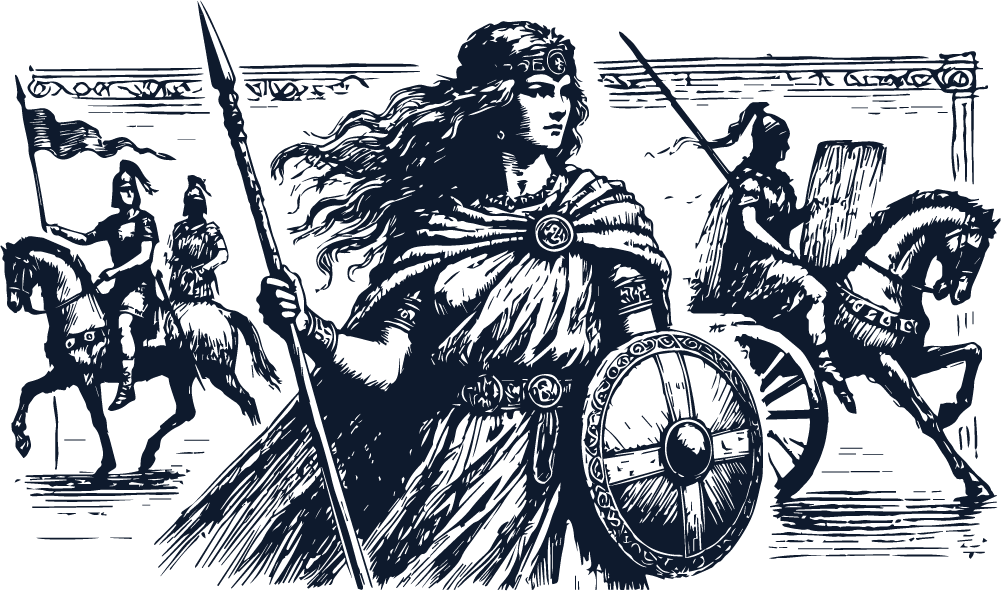
Boudicca, the fierce and legendary leader of the Iceni tribe, stands as one of Britain’s most iconic historical figures. Known for her courage in leading a rebellion against Roman rule in 60-61 AD, her legacy continues to inspire generations. Whether you’re studying for the Life in the UK test or simply interested in British history, understanding Boudicca’s story is essential.
Who Was Boudicca?
Boudicca was the queen of the Iceni, a Celtic tribe living in what is now modern-day East Anglia, England. Born around 30 AD, she became queen after the death of her husband, King Prasutagus. The Iceni were initially allies of the Romans, but after Prasutagus’ death, the Romans seized their lands, flogged Boudicca, and assaulted her daughters. This act of brutality ignited a fire in Boudicca, leading her to organize a rebellion.
The Rebellion Against Rome
In 60 AD, Boudicca led a united force of Iceni and other tribes against the Roman occupation. Her army successfully attacked and burned key Roman cities, including Camulodunum The Roman name for modern-day Colchester, which was the first capital of Roman Britain. (modern-day Colchester), Londinium (London), and Verulamium (St Albans). Boudicca’s forces were relentless, leaving a trail of destruction, and their cause drew sympathy from many Britons oppressed by Roman rule.
However, the rebellion was short-lived. The Roman governor, Gaius Suetonius Paulinus, regrouped his forces and decisively defeated Boudicca’s army at the Battle of Watling Street. Following the defeat, Boudicca is believed to have taken her own life, although some accounts suggest she may have died of illness.
Why Is Boudicca Important in British History?
Boudicca’s story is significant not just because of the rebellion itself, but also because of what she symbolizes. Here are some reasons why Boudicca’s legacy remains important:
- A Symbol of Resistance: Boudicca has come to represent the struggle for freedom against oppressive rulers. Her defiance in the face of Roman imperialism has made her a symbol of British resistance.
- Empowerment of Women: As a female leader, Boudicca broke traditional gender roles of her time. Her role as a warrior queen challenges the male-dominated narratives of ancient history, showing that women could wield power and command respect.
- Influence on British Identity: Boudicca’s legacy has been revived and reinterpreted over centuries. During the reign of Queen Victoria, parallels were drawn between the two queens, and Boudicca was seen as a foundational figure in Britain’s national identity.
The Statue of Boudicca in London
If you’ve visited London, you may have noticed a striking bronze statue of Boudicca near the Houses of Parliament. Erected in 1902, it shows Boudicca standing powerfully in a war chariot with her daughters. This statue is a reminder of her enduring legacy as a warrior queen who fought for her people’s freedom.
Did You Know? Interesting Facts About Boudicca
- Modern Comparisons: Boudicca has been compared to other historical figures like Joan of Arc, who also led resistance movements against foreign invaders.
- Roman Records: Much of what we know about Boudicca comes from Roman historians such as Tacitus and Cassius Dio. While their accounts provide valuable insight, they are biased, as they represent the Roman perspective.
The Legacy of Boudicca Today
Boudicca’s legacy has transcended her time, influencing not only history books but also popular culture. From movies and television to literature and art, Boudicca’s story has captured the imaginations of people for centuries. For those studying for the Life in the UK test, her story is an essential part of understanding Britain’s complex relationship with its past and the Roman Empire.
Boudicca reminds us of the enduring human spirit’s resistance to oppression. Whether viewed as a tragic figure or a heroic icon, her legacy remains a powerful symbol of courage and defiance.
Conclusion
Boudicca’s story is a vital part of British history and a significant topic for those preparing for the Life in the UK test. Her rebellion against the Romans and her enduring legacy as a symbol of freedom and resistance make her an unforgettable figure. By understanding her story, you not only gain insights into the past but also appreciate the rich tapestry of Britain’s cultural and historical identity.
Learning about Boudicca for the Life in the UK Test?
- Boudicca was the queen of the Iceni tribe in East Anglia, leading a rebellion against Roman rule.
- Her rebellion occurred around 60-61 AD after her husband, King Prasutagus, died, and the Romans mistreated her and her daughters.
- She led attacks on key Roman cities, including Camulodunum (Colchester), Londinium (London), and Verulamium (St Albans).
- Boudicca’s forces were eventually defeated at the Battle of Watling Street by the Roman governor Gaius Suetonius Paulinus.
- Boudicca is remembered as a symbol of resistance and British freedom against oppression.
- There is a statue of Boudicca in London, near the Houses of Parliament, honoring her legacy.